
01
Retina specialist care
Complex retinal conditions are assessed and treated by our retina specialist, Dr. Urmil Shah – Diploma in Ophthalmology, DNB Ophthalmology, with experience in retinal and vitreoretinal care.

Diabetic eye & retina care
Diabetes and retinal conditions can affect sight before symptoms become noticeable. Detailed retinal screening helps identify changes early and guides the right care for your eyes.
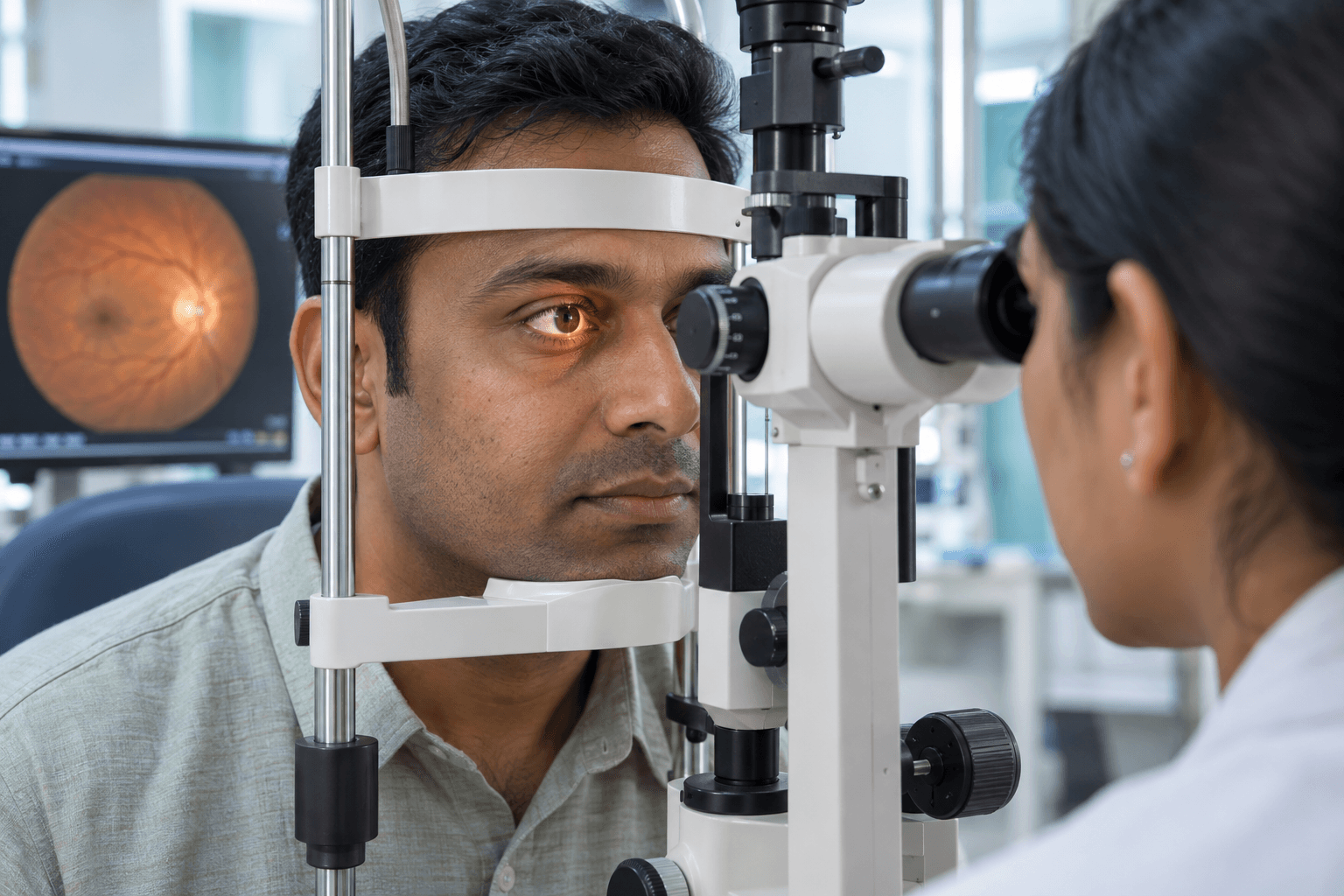
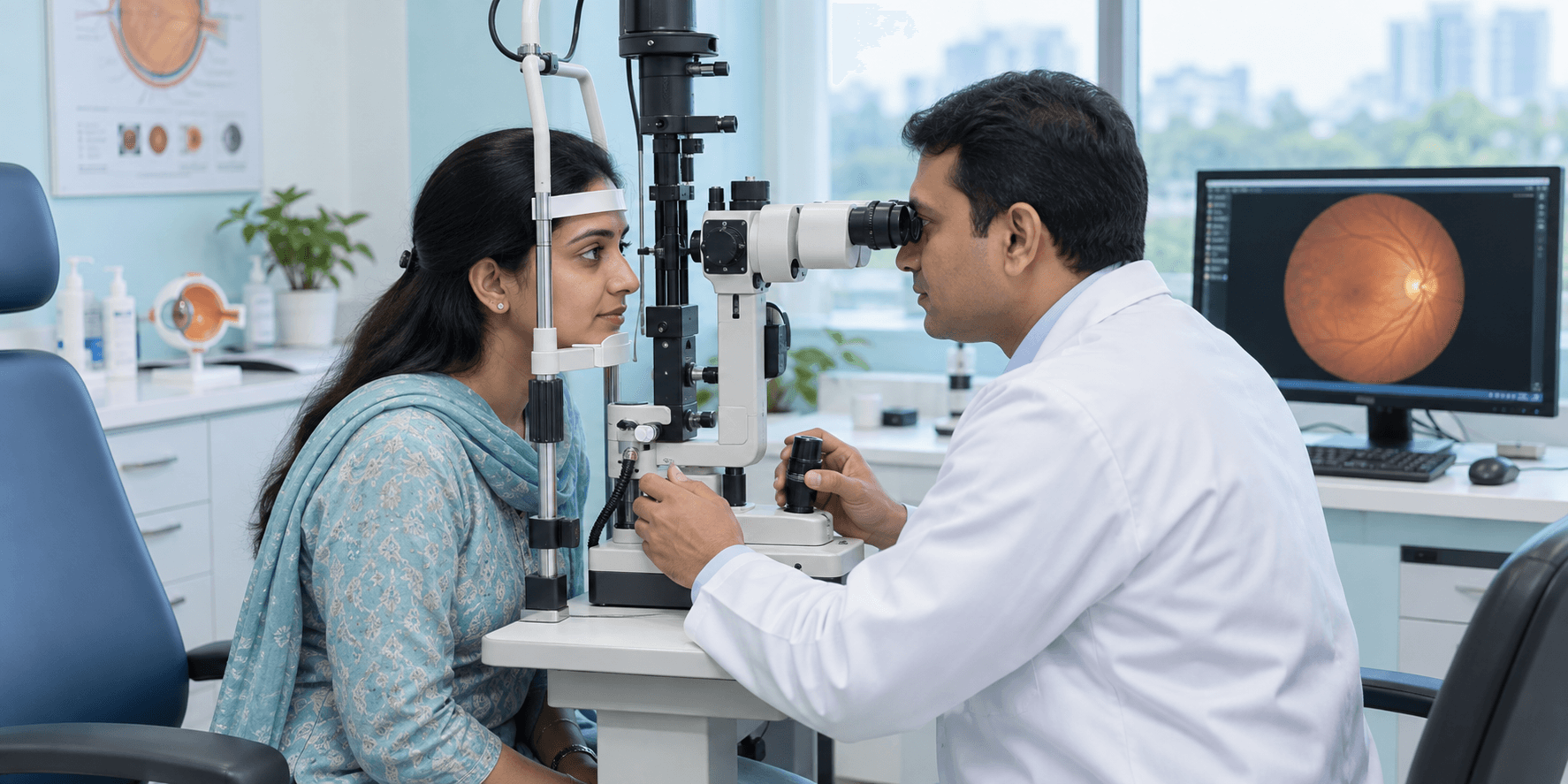
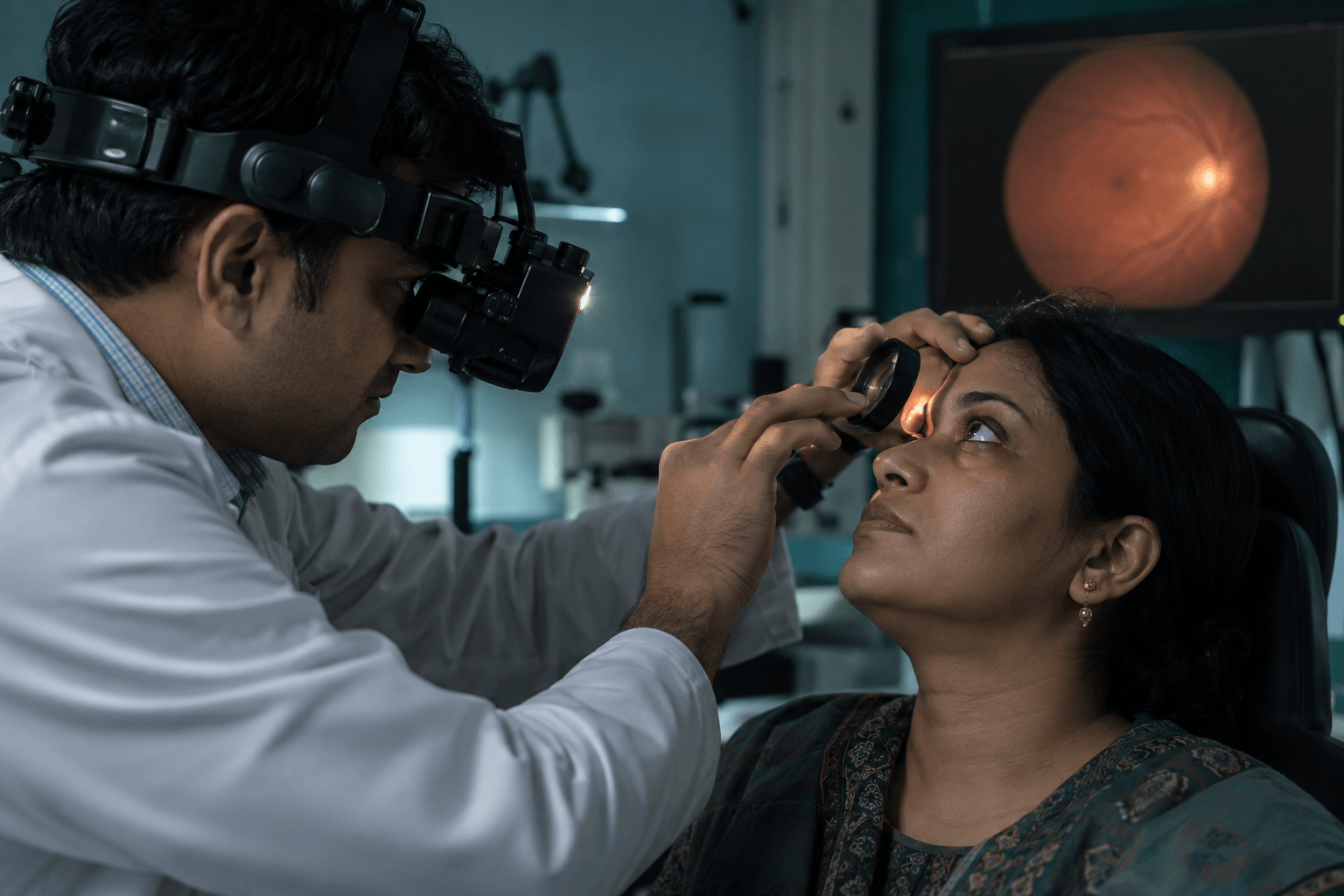
Dilated retinal examination for a detailed view of the retina
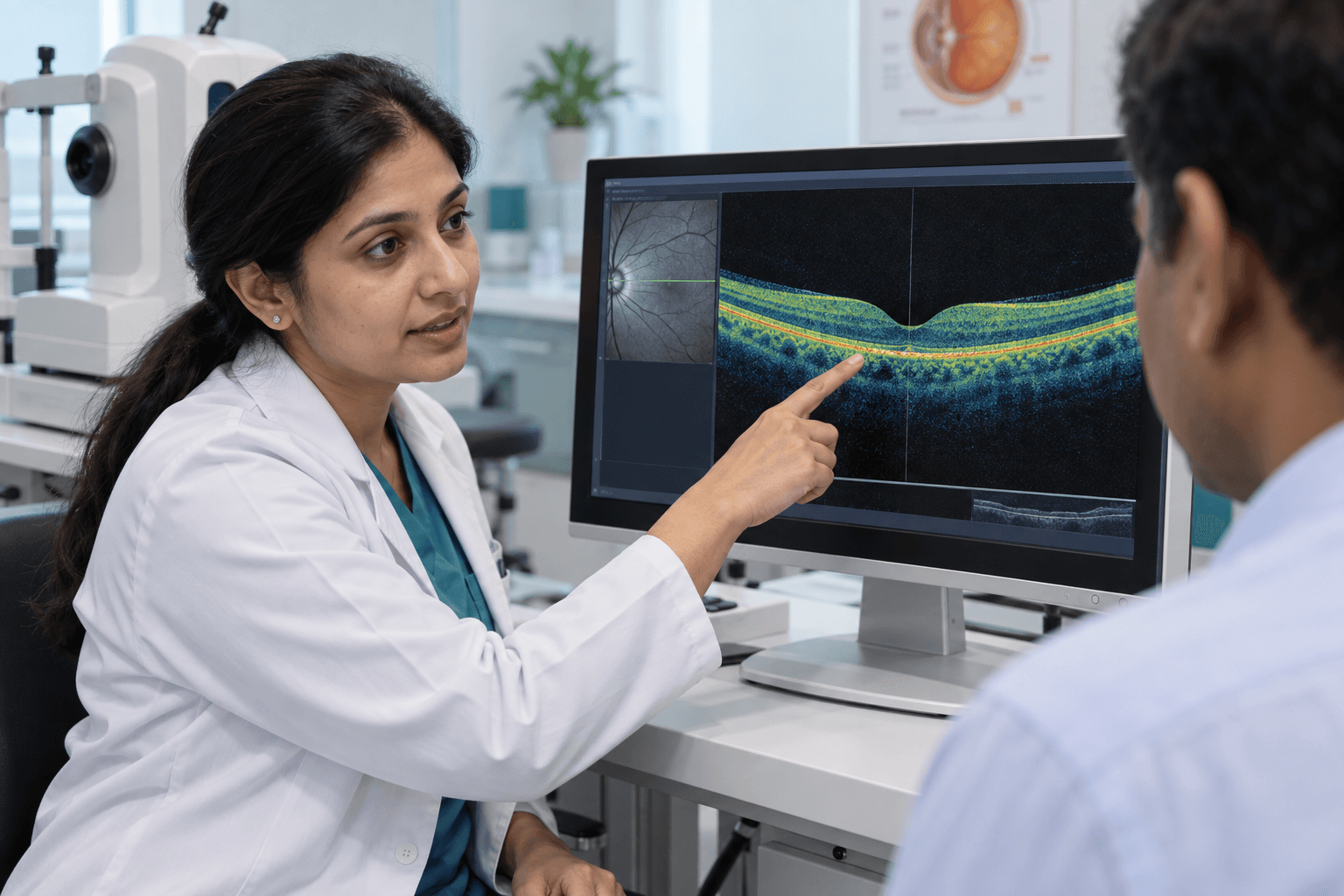
OCT imaging to assess retinal layers
Fundus photography to document and monitor changes
Essential knowledge
The retina is the light-sensitive layer at the back of the eye. It converts light into signals that travel to the brain through the optic nerve, allowing you to see.
Some retinal damage can be permanent. Early evaluation and timely treatment can help protect the vision that remains.
Retina care focuses on diagnosing and managing conditions affecting the retina, macula and blood vessels at the back of the eye.
Why choose us
Specialist retinal assessment, detailed imaging and timely treatment for patients and families across Gandhidham and the Kutch region.
Complex retinal conditions are assessed and treated by our retina specialist, Dr. Urmil Shah – Diploma in Ophthalmology, DNB Ophthalmology, with experience in retinal and vitreoretinal care.
Regular retinal screening for people with diabetes helps detect diabetic retinopathy early, often before vision is affected.
Optical coherence tomography (OCT) gives detailed cross-sectional images of the retina and macula to detect swelling or damage.
Photographs of the back of the eye record the retina and blood vessels, allowing changes to be compared over time.
Laser treatment is available where suitable to help seal leaking blood vessels and reduce the risk of further vision loss.
Complex retinal and vitreoretinal surgeries are performed by our retina specialist when surgery is recommended.
Scheduled reviews compare imaging and examination results over time, so treatment can be adjusted when needed.
Clear guidance through diagnosis, treatment and eligible insurance or TPA documentation, in English, Hindi or Gujarati.
Retina evaluation guide
Retinal conditions can progress without pain. New or unusual changes in vision should be assessed early, particularly if you have diabetes or other risk factors.
Straight lines may appear wavy, bent or uneven, and central detail may look blurred.
Clinical next step: comprehensive retinal assessmentA sudden increase in specks, threads or shadow-like shapes moving across your sight needs prompt attention.
Adjusting between bright and dim surroundings may become slower or less comfortable.
Dark, blurred or missing areas may appear toward the outer part of your visual field.
Brief streaks, sparks or camera-flash sensations can occur when the retina is being pulled or irritated.
A shadow spreading across part of your vision is urgent and requires immediate eye assessment.


Specialist retina consultationAssessment and next steps explained clearly
Book a checkTreatment options
From detailed retinal imaging to diabetic eye care, laser treatment and vitreoretinal surgery, every plan is based on your diagnosis and eye health.
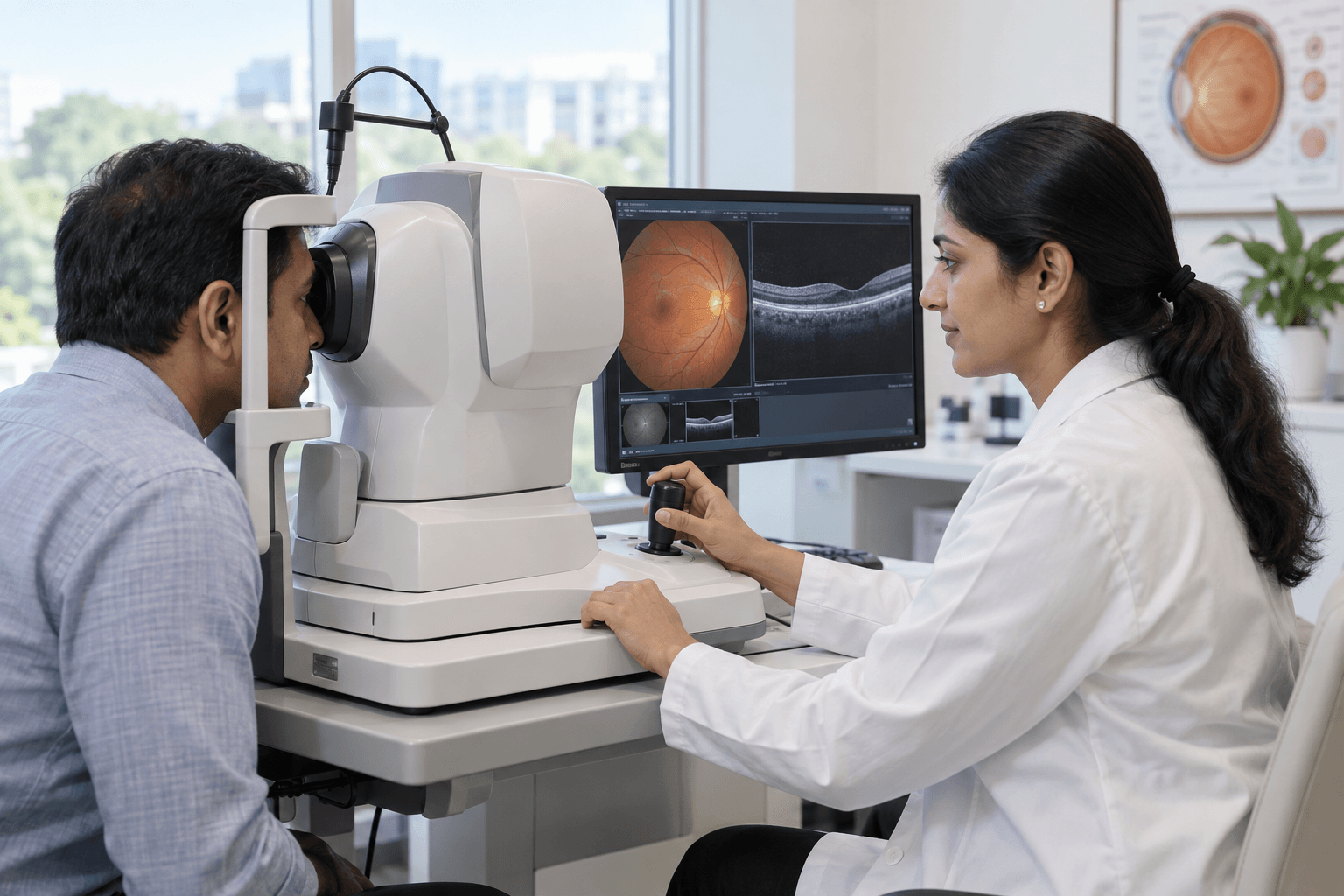
A dilated retinal examination with OCT scans and fundus photography helps detect, stage and document conditions affecting the retina and macula.

Regular screening for people with diabetes finds retinal changes early, so monitoring or treatment can begin before vision is seriously affected.
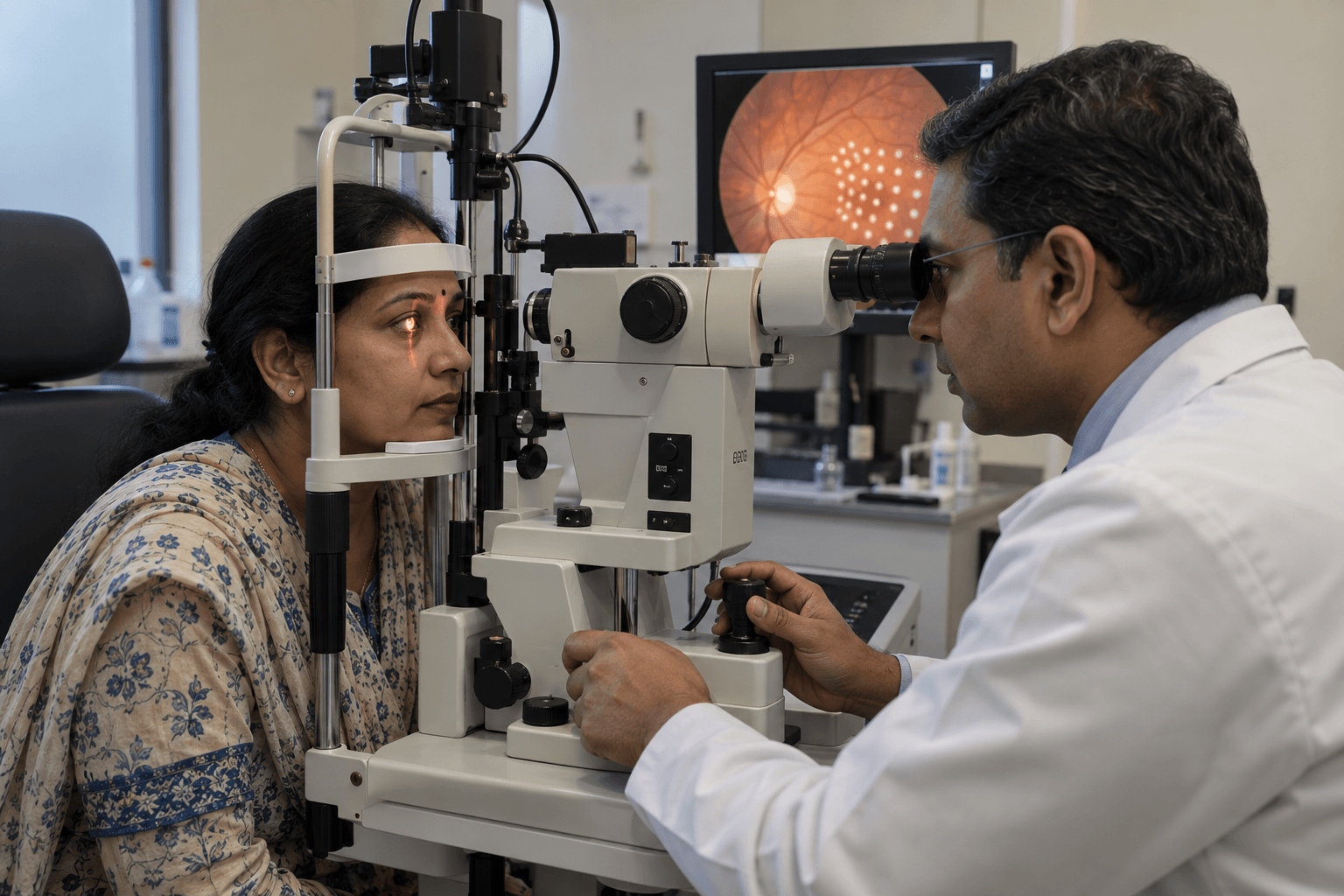
Where suitable, laser treatment helps seal leaking blood vessels and treat abnormal areas of the retina to reduce the risk of further vision loss.
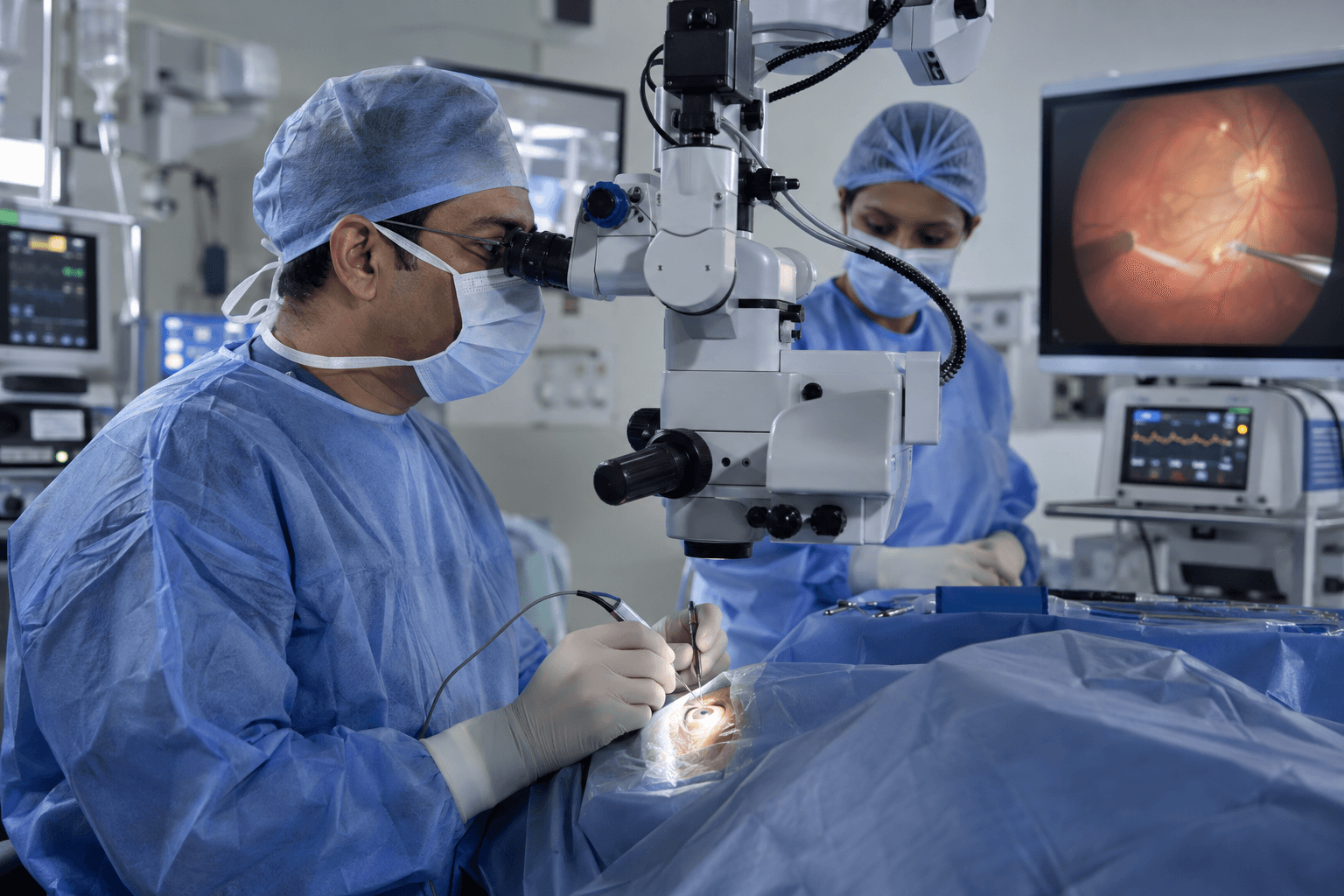
Complex retinal and vitreoretinal surgeries are performed by our retina specialist when surgery is the most suitable option.
Treatment choice depends on your diagnosis, the stage of the condition and your overall eye health. Some vision loss cannot be reversed; treatment aims to protect the sight you have.
Many retinal conditions develop without early symptoms. Regular checks and timely treatment aim to protect your vision for the years ahead.

Scan results are explained clearly so you understand your retina health and the reasons for treatment.

Retinal imaging can reveal changes before you notice any difference in your vision.

Timely care for the macula aims to preserve the sharp central vision used for reading and recognising faces.
Results vary with the condition, its stage at diagnosis and how consistently treatment and follow-up are maintained. Your doctor will discuss realistic expectations with you.
Patient Care
Our team provides eye consultations, diagnostic evaluations and treatment planning based on each patient's individual eye health needs.
Eye examinations help our doctors assess your symptoms and eye health to determine the appropriate next steps for your care.
Eye examinations and diagnostic tests help our doctors assess eye conditions and guide clinical decisions.
Our doctors discuss suitable treatment options and recommend follow-up care according to each patient's individual needs.
Helpful guidance about retina checks, diabetic eye screening, warning signs, laser treatment and what to expect from your visit.

Most people with diabetes should have a retinal examination at least once a year, even if their vision seems normal. Your doctor may advise more frequent checks if diabetic retinopathy or other changes are found.
A sudden increase in floaters, flashes of light, or a shadow or curtain across your vision can be a sign of a retinal tear or detachment. Please contact us or seek an eye examination urgently.
A retina examination usually includes dilating eye drops, a detailed examination of the back of the eye, and imaging such as OCT scans and fundus photography. Your doctor will explain which tests are needed for you.
Dilating drops can blur your vision and make you sensitive to light for a few hours. We recommend bringing someone with you or arranging transport, and carrying sunglasses for the journey home.
Laser treatment is usually performed with numbing eye drops. Some people feel mild discomfort or brief stinging during treatment. Your doctor will explain what to expect before the procedure.
It depends on the condition and how early it is treated. Some vision loss cannot be reversed, which is why early detection and timely treatment are important to protect the sight you have.
Complex retinal and vitreoretinal surgeries are performed by our retina specialist. Your doctor will discuss whether surgery is recommended and explain the benefits, risks and recovery.
Take the first step
Book a retina check to discuss your symptoms, diabetic eye health and treatment options with the Neyani Eye Hospital team.
Sudden flashes, new floaters or a shadow across your vision need urgent assessment—please call us.