
01
Specialist-led care
Care led by Dr. Yajuvendra Singh Rathore, MBBS, MS Ophthalmology (Reg. No: G-60559), with experience in diagnosing and managing glaucoma.
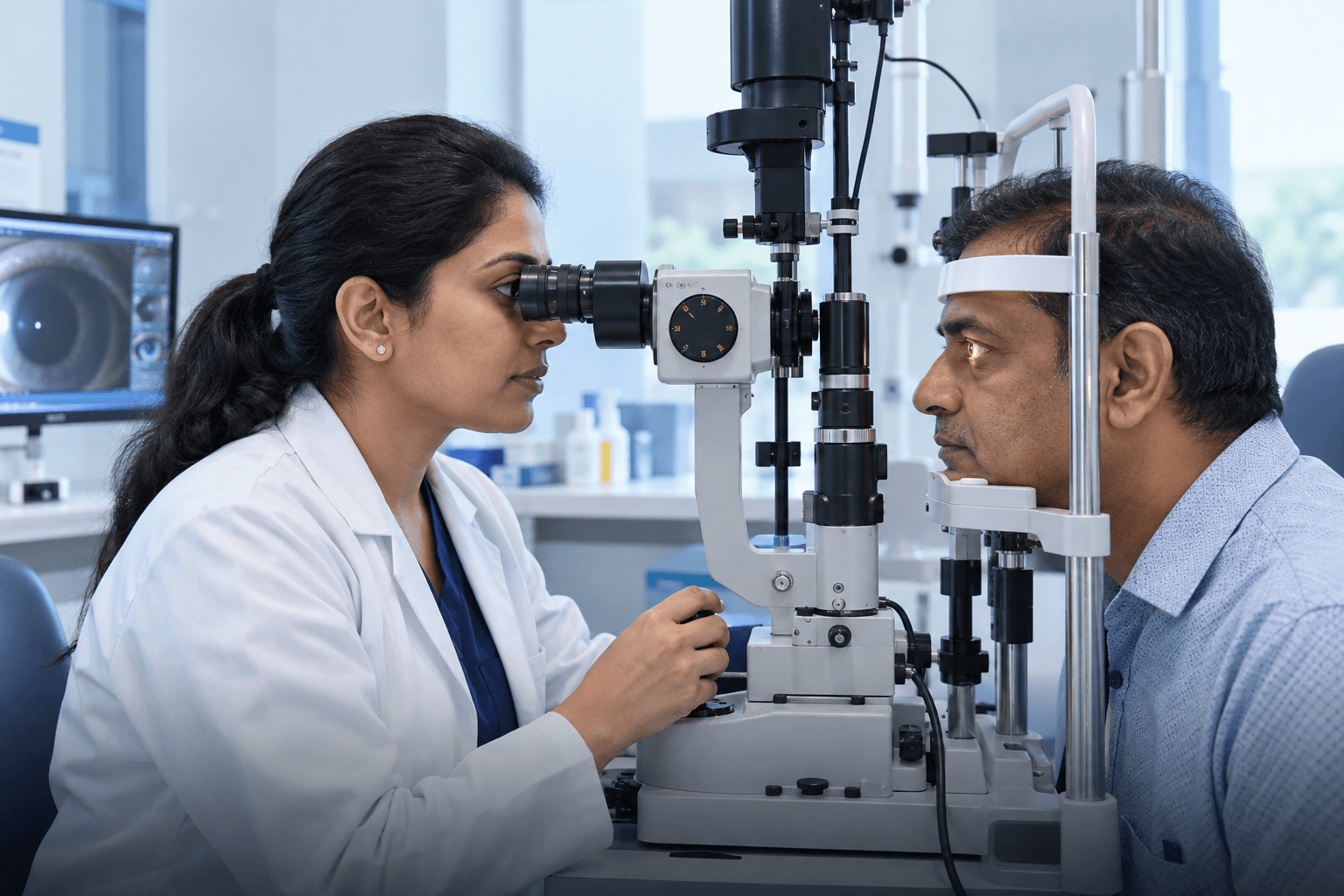
Glaucoma care
Glaucoma can progress quietly. A detailed eye examination can detect changes early, so your doctor can plan treatment and help preserve the vision you have.
Eye pressure check measured as part of assessment
Optic nerve review with imaging where indicated
Visual field testing to monitor functional vision
Understanding glaucoma
Glaucoma is a group of eye conditions that damage the optic nerve—the connection that carries visual information from the eye to the brain. It is often associated with raised pressure inside the eye, although it can also occur when pressure readings are within the usual range.
It is sometimes called the “silent thief of sight” because early glaucoma commonly causes no pain or noticeable vision change. Regular examinations are important, particularly if you have a family history of glaucoma, diabetes, high eye pressure or are over 40.
Why choose us
Detailed diagnostics, specialist assessment and long-term monitoring for patients and families across Gandhidham and the Kutch region.
Care led by Dr. Yajuvendra Singh Rathore, MBBS, MS Ophthalmology (Reg. No: G-60559), with experience in diagnosing and managing glaucoma.
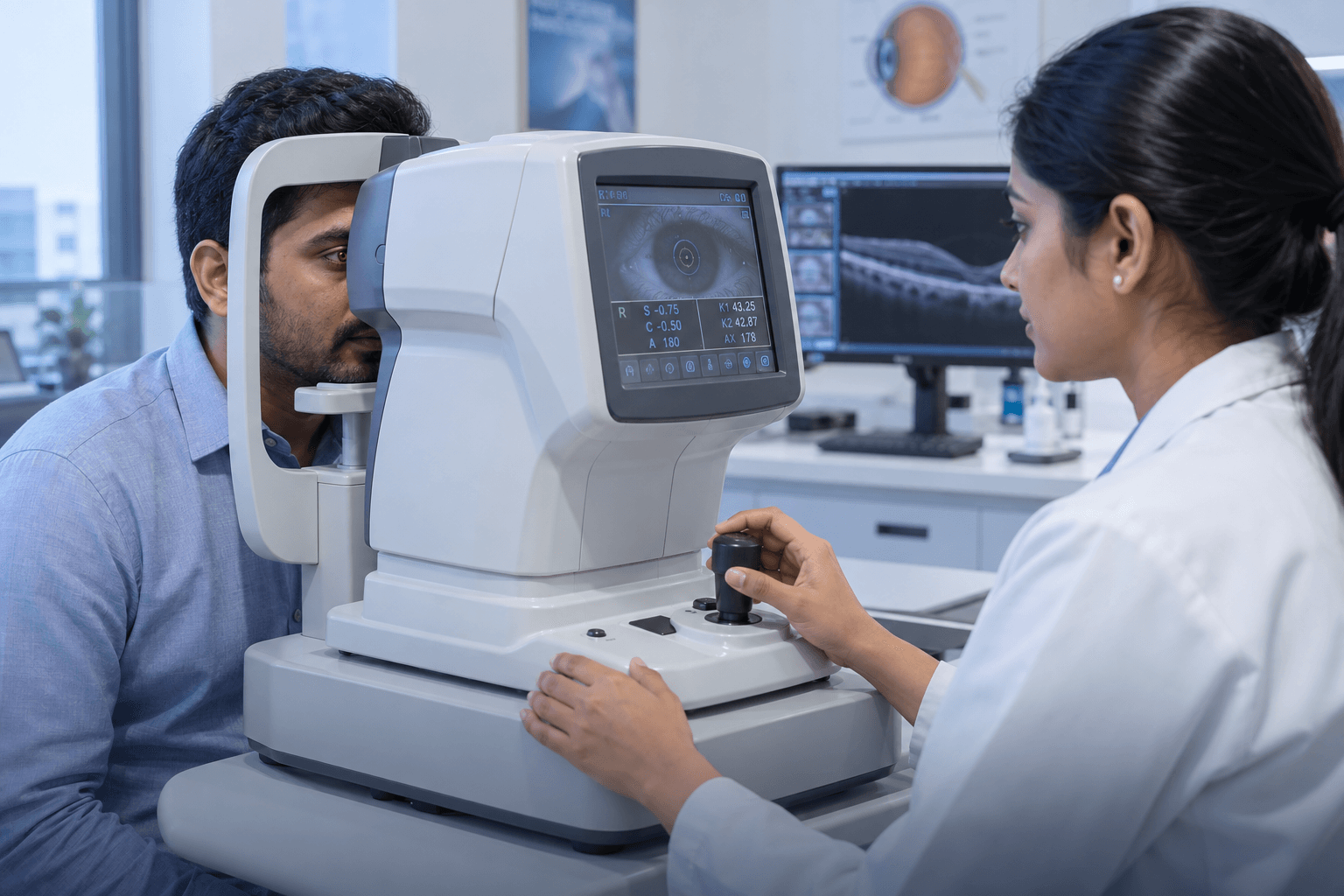
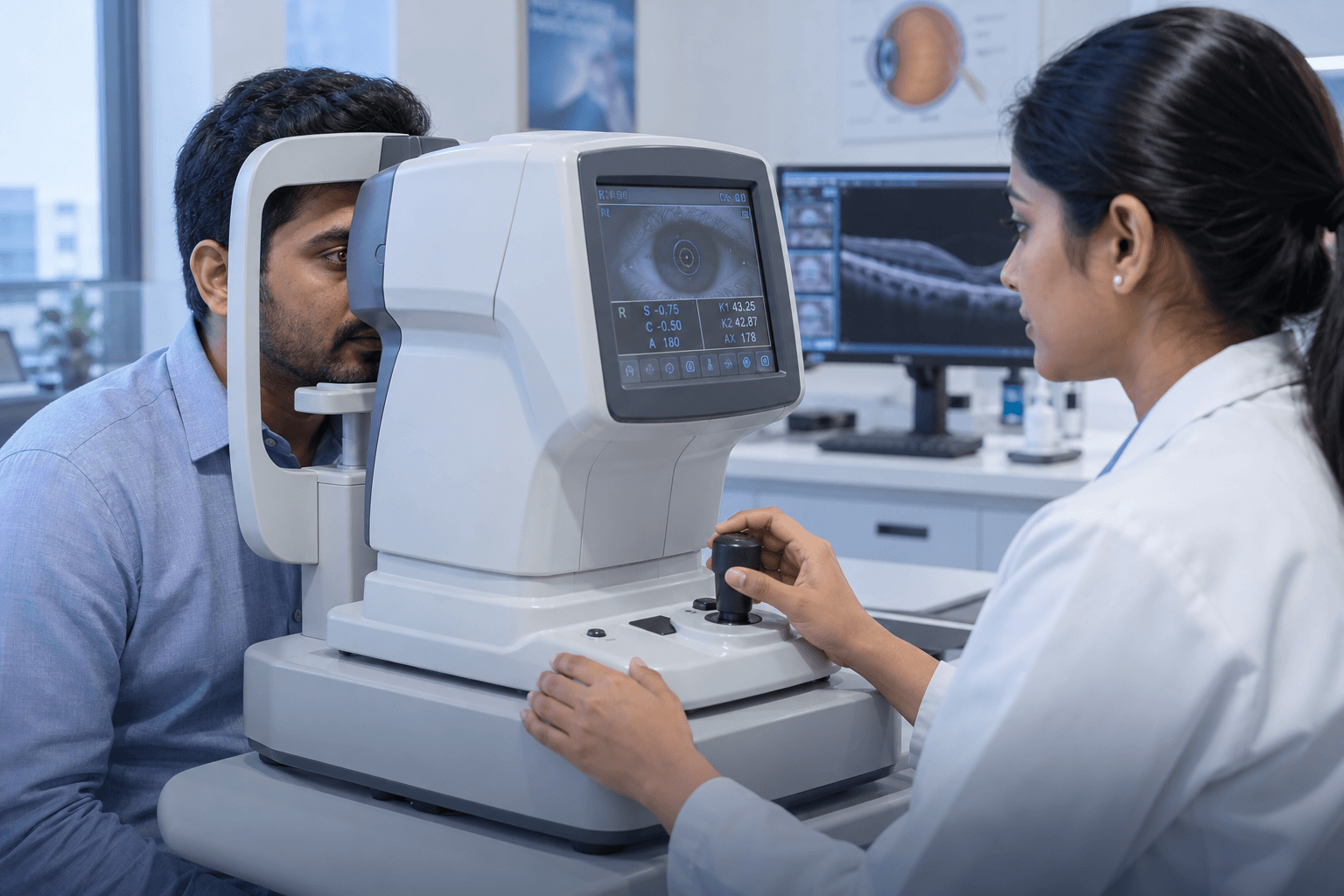
Intraocular pressure (IOP) is measured as part of a glaucoma assessment and rechecked at follow-up visits.
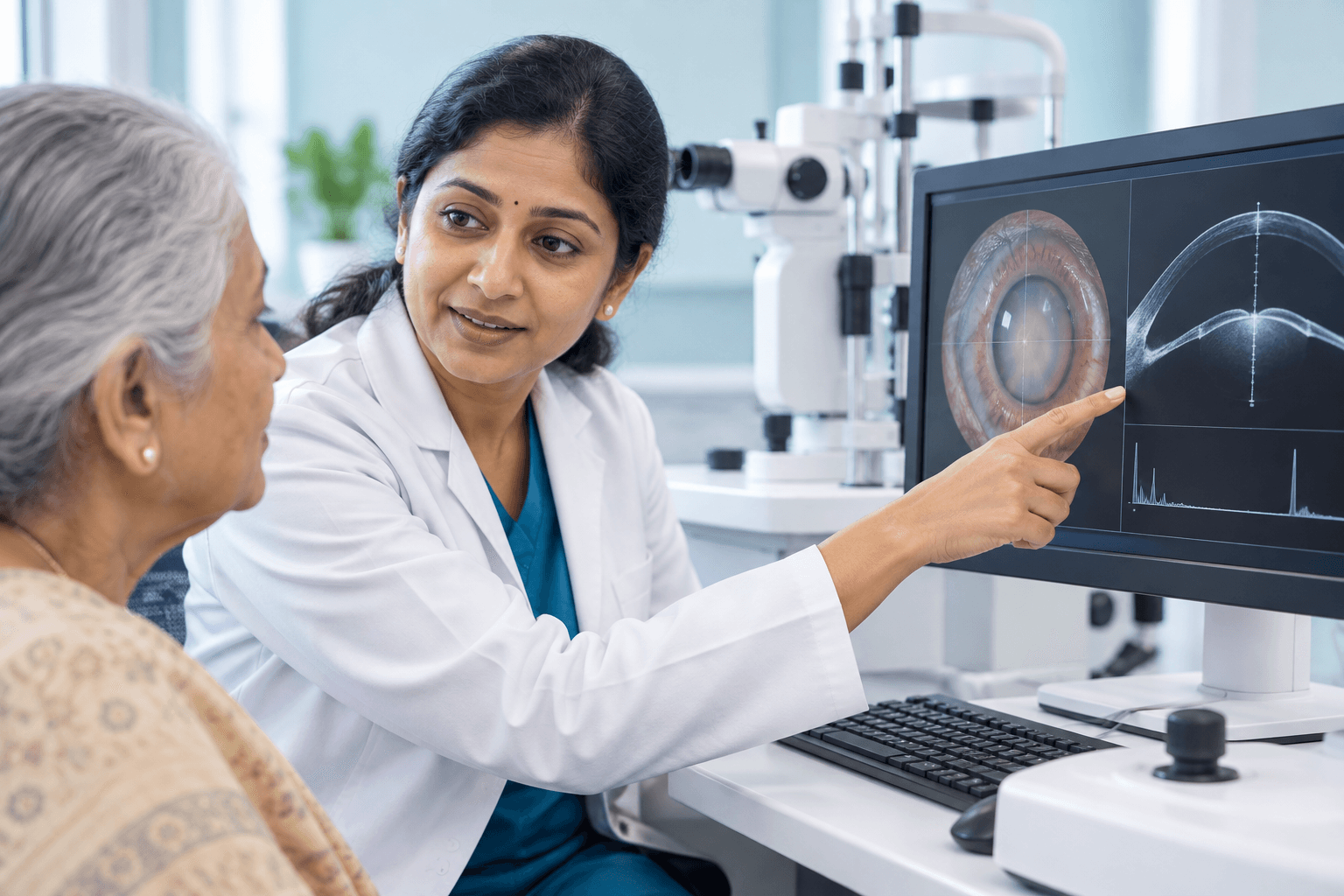
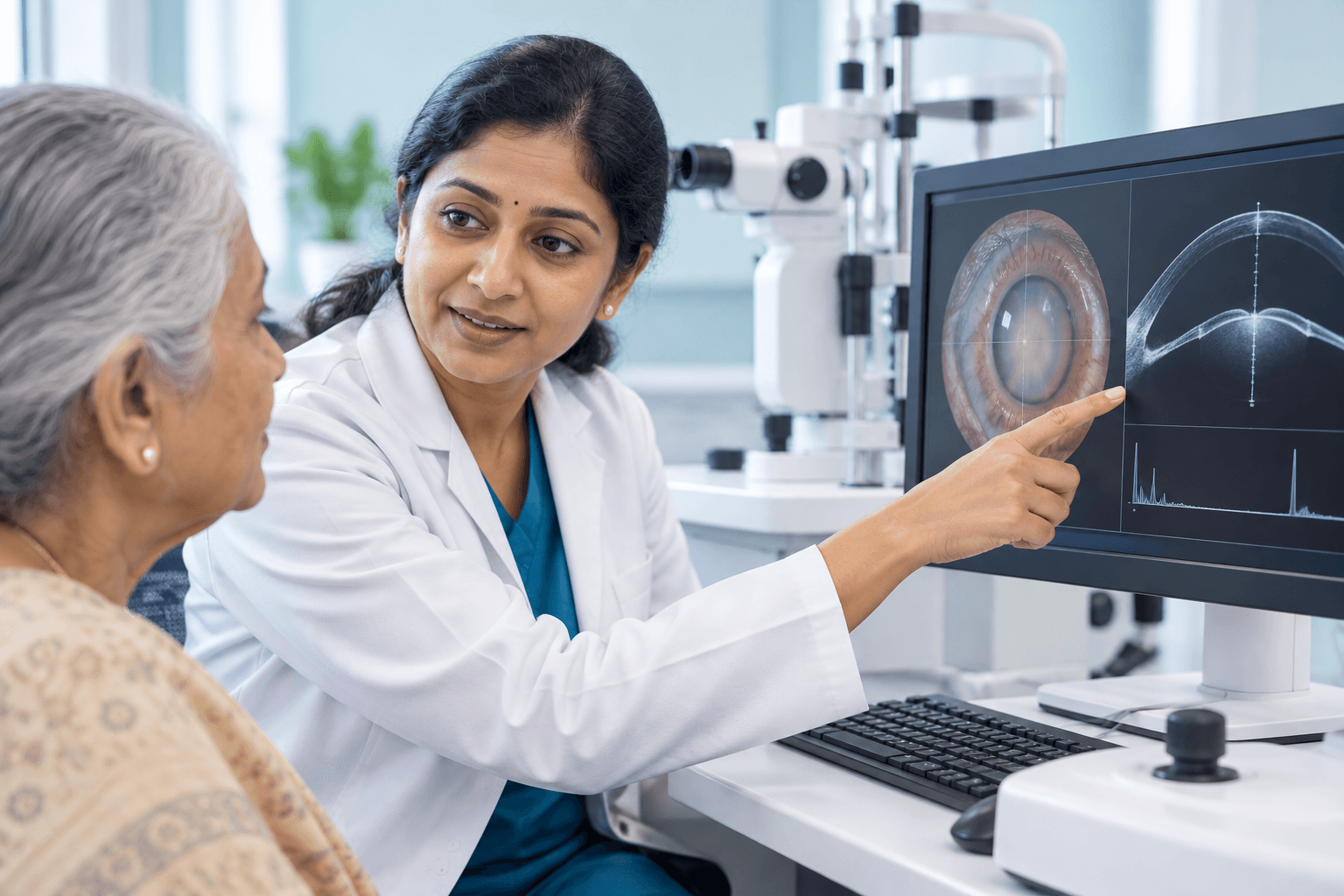
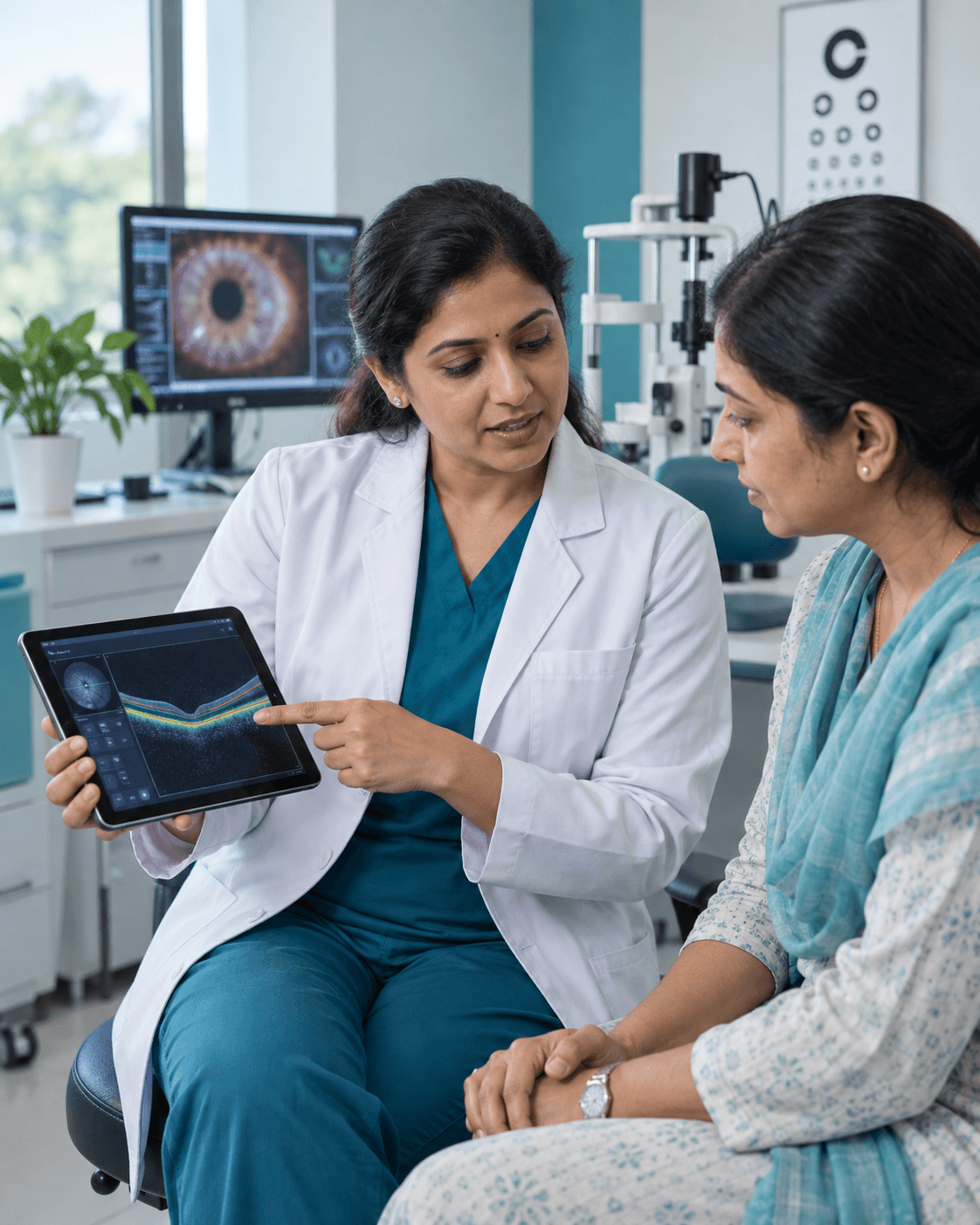
Optic disc evaluation with OCT and fundus imaging helps detect and document changes to the optic nerve.
A visual field analyser checks side vision, helping identify functional changes that may not be noticed day to day.
Medical or surgical management is selected after examination, according to the type and stage of glaucoma.
Comparing pressure, imaging and field results over time helps your doctor judge whether treatment is working.
The team provides clear guidance through diagnosis, treatment and eligible insurance or TPA documentation.
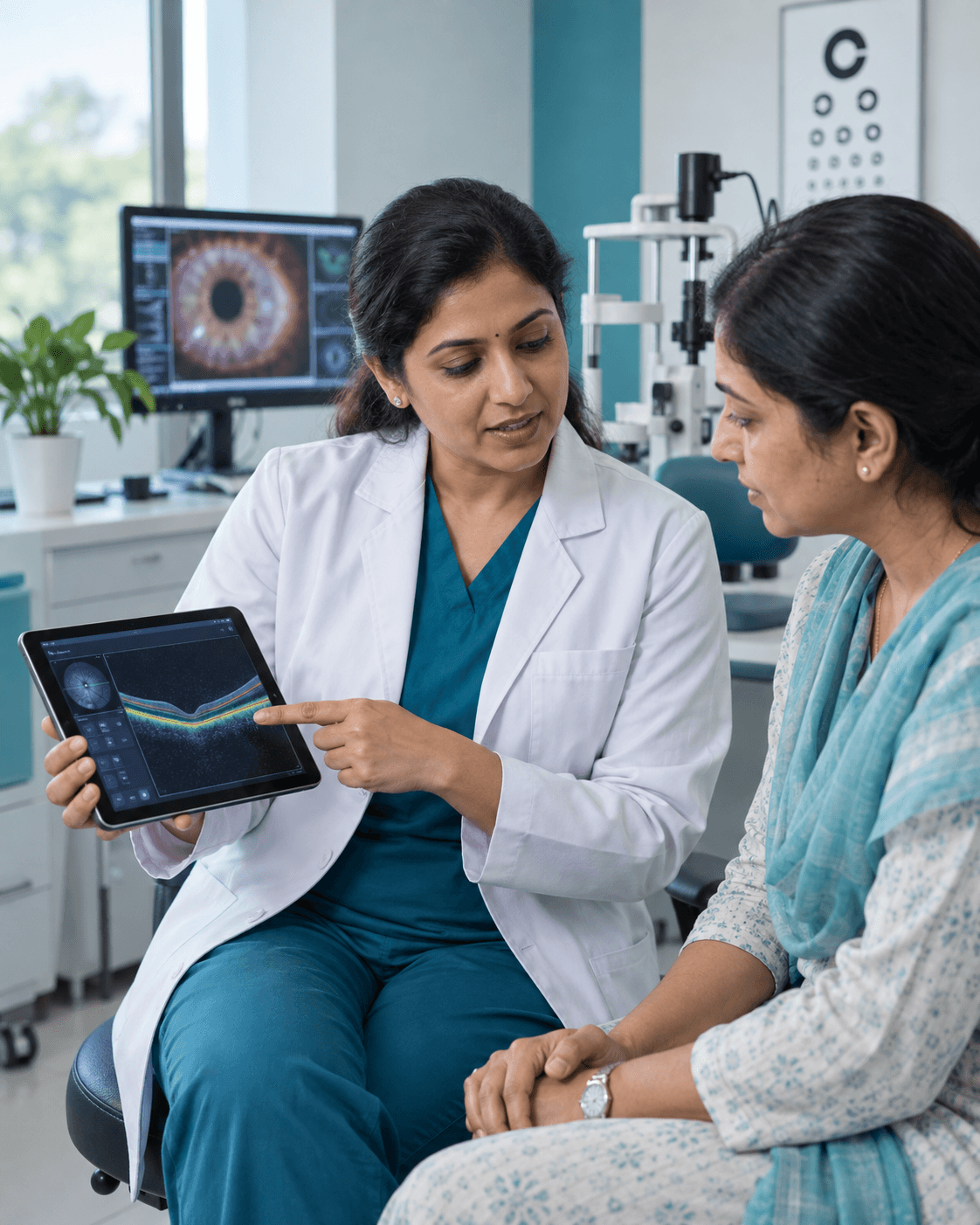
Consultations are supported in English, Hindi and Gujarati to help patients and families understand their care.
Glaucoma risk checklist
A parent or sibling with glaucoma increases your risk, even when your vision feels normal.
Family history Clinical next step: comprehensive glaucoma assessmentAge and certain health conditions can raise risk. Your doctor can advise how often your eyes should be checked.
Risk assessmentHigh pressure does not always mean glaucoma, but it should be assessed with the optic nerve and visual field.
Pressure reviewGlaucoma often affects peripheral vision first. Any new vision loss needs prompt professional assessment.
Visual fieldRegular reviews help check pressure, optic-nerve appearance and whether treatment is controlling the condition.
Ongoing monitoring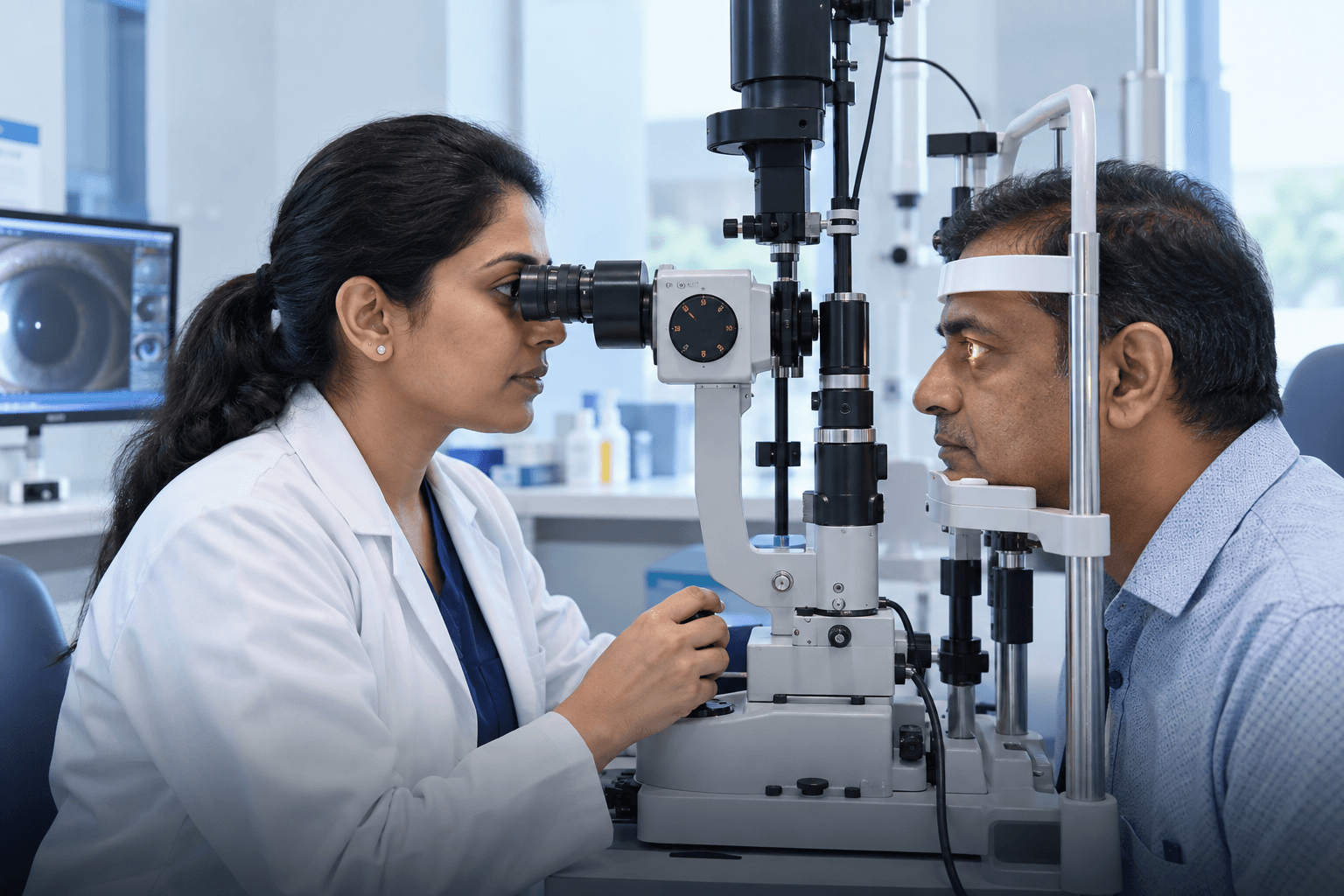
Treatment options
From detailed diagnosis to eye drops, surgery and long-term monitoring, every treatment plan is based on the type and stage of your glaucoma.
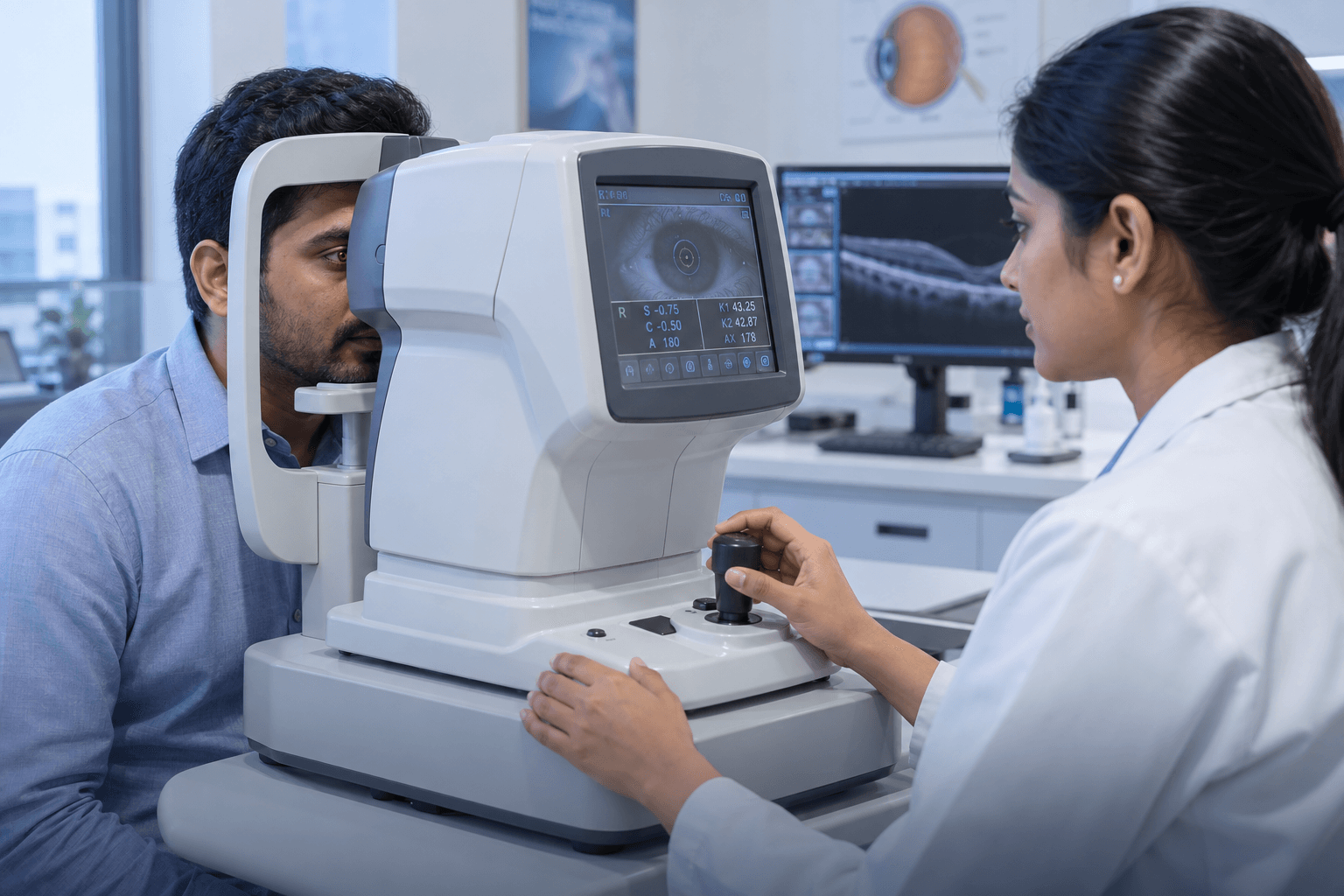
A detailed examination confirms whether glaucoma is present, identifies its type and records a baseline for comparing future results.

Prescription eye drops are commonly the first treatment, lowering eye pressure to help protect the optic nerve from further damage.
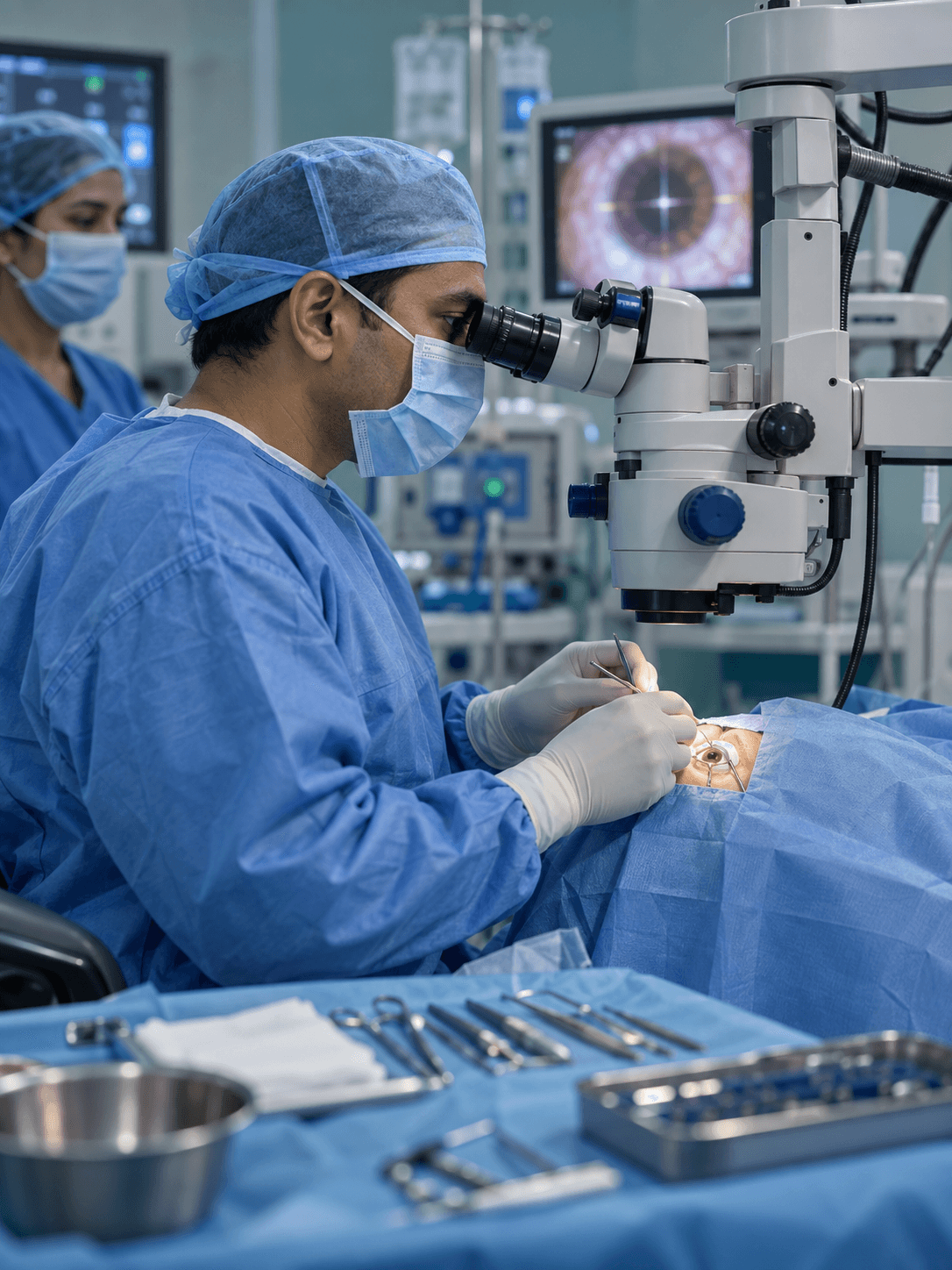
When drops alone do not control pressure well enough, surgery may be recommended to improve fluid drainage from the eye.
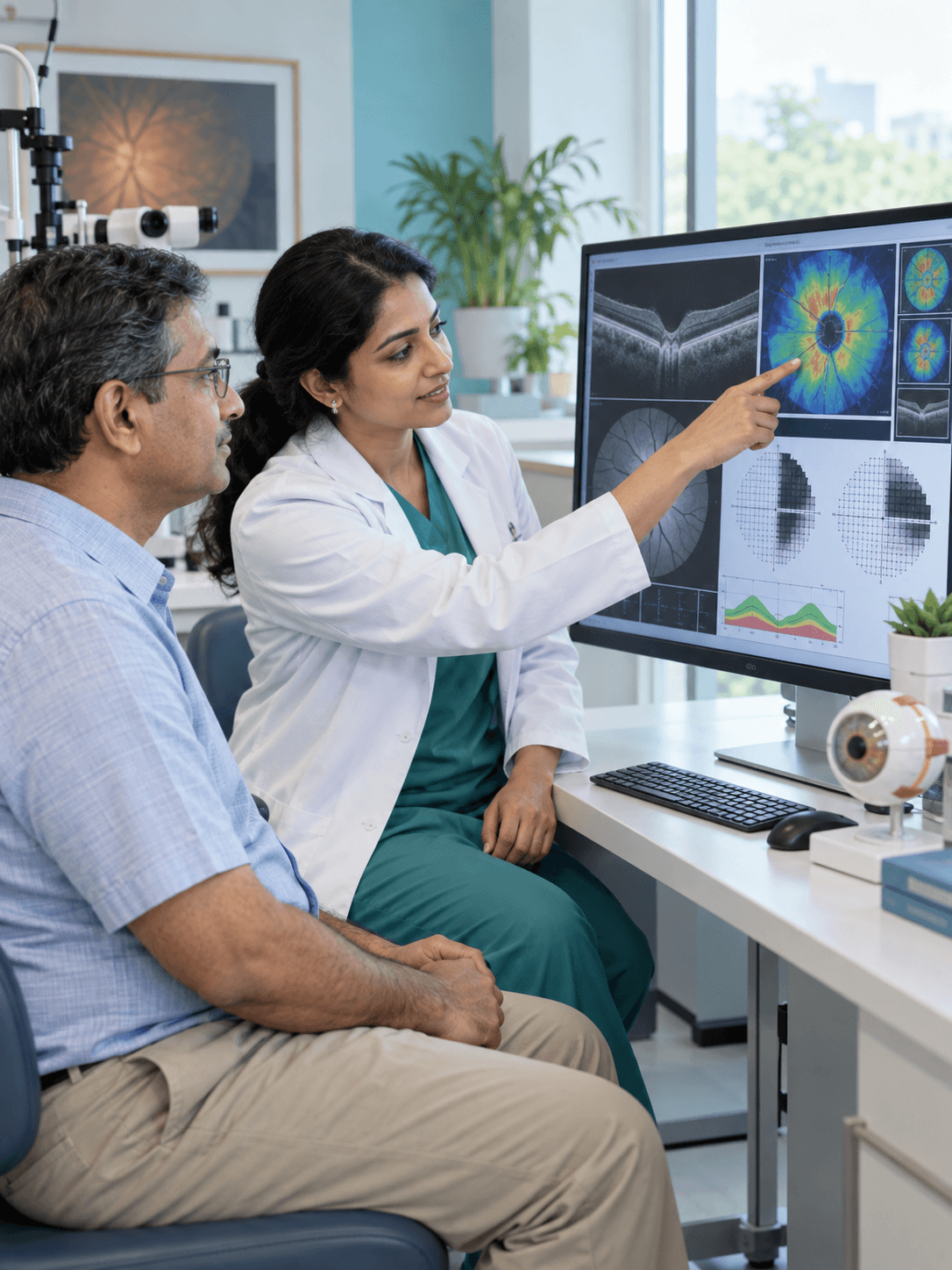
Glaucoma needs lifelong follow-up. Regular reviews compare pressure, imaging and field results to check that treatment is working.
Treatment choice depends on the type and stage of glaucoma, eye pressure and your overall eye health. Vision already lost to glaucoma usually cannot be restored; treatment aims to protect remaining sight.
Glaucoma often progresses without symptoms. Early diagnosis and consistent treatment aim to protect your sight for the years ahead.
Well-managed glaucoma helps many people continue reading, driving and daily activities, depending on their eye health.
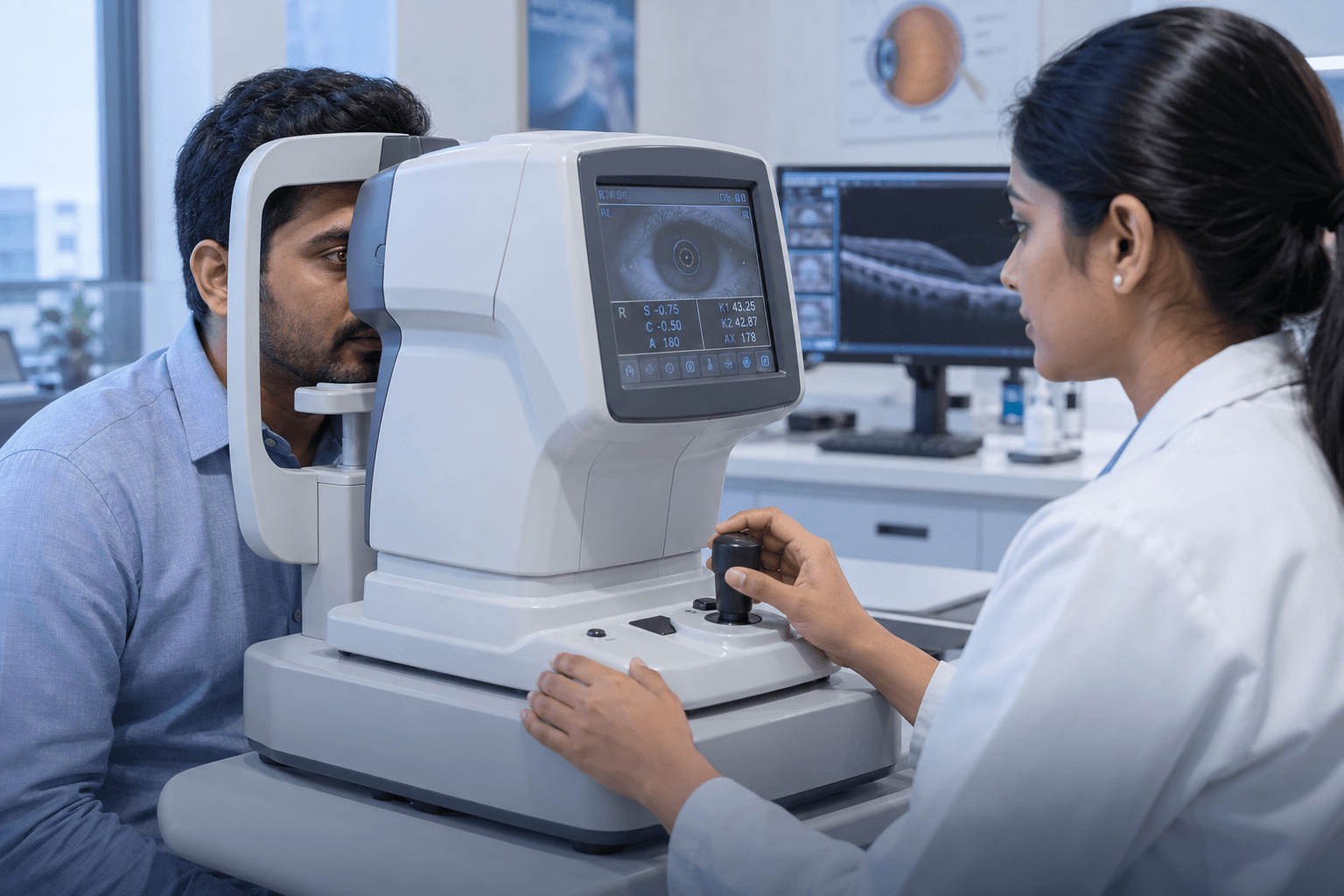
Regular checks can identify glaucoma before you notice any change in your vision.
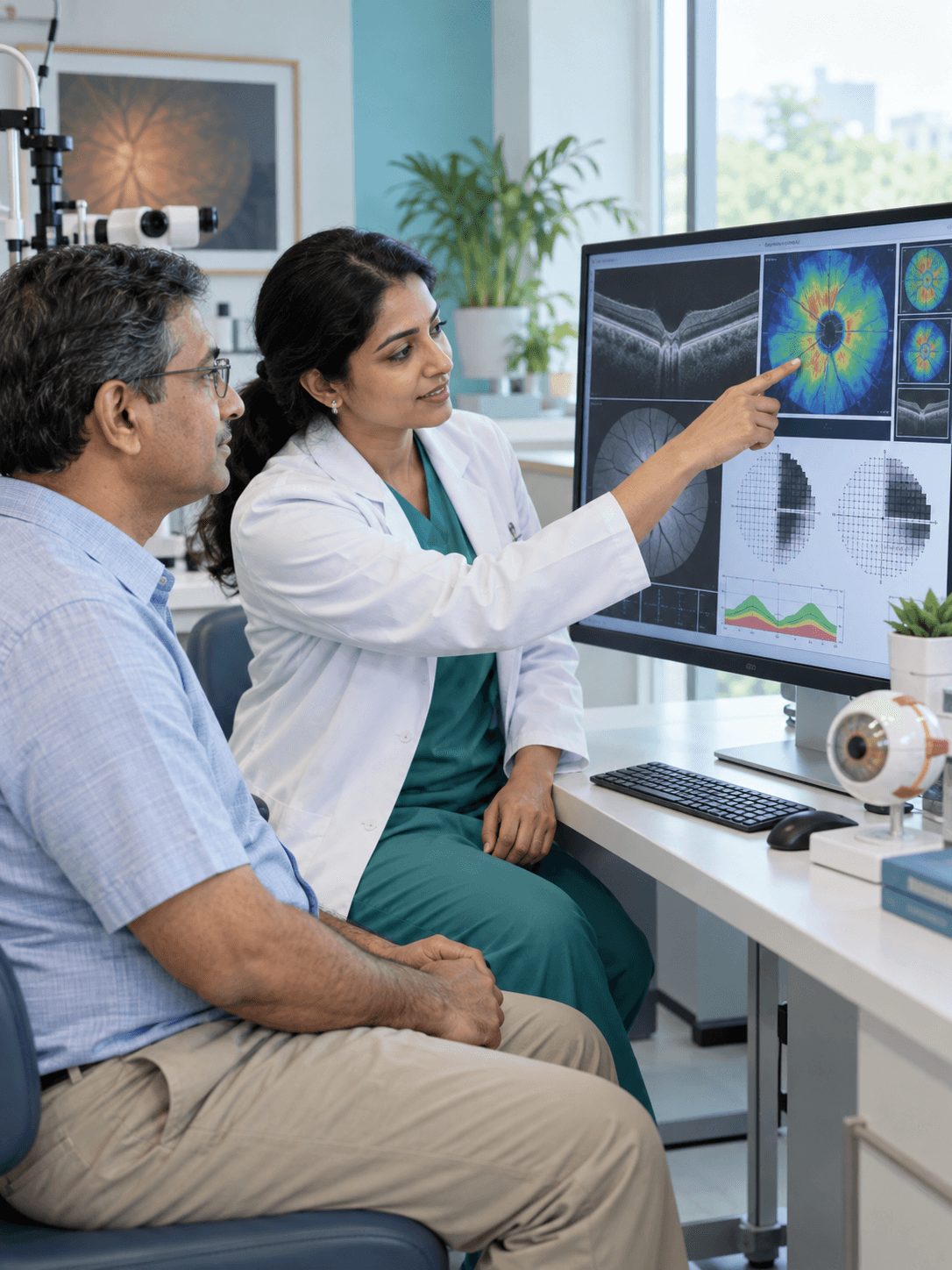
Timely treatment aims to slow further optic-nerve damage and help preserve the vision you have.
Results vary with the type and stage of glaucoma and how consistently treatment and follow-up are maintained. Your ophthalmologist will discuss realistic expectations with you.
Patient Care
Our team provides eye consultations, diagnostic evaluations and treatment planning based on each patient's individual eye health needs.
Eye examinations help our doctors assess your symptoms and eye health to determine the appropriate next steps for your care.
Eye examinations and diagnostic tests help our doctors assess eye conditions and guide clinical decisions.
Our doctors discuss suitable treatment options and recommend follow-up care according to each patient's individual needs.
Helpful guidance about glaucoma checks, eye pressure, treatment options and what to expect from follow-up care.
Vision already lost to glaucoma usually cannot be restored. However, glaucoma can often be controlled with treatment and regular monitoring, which aims to slow or prevent further damage to the optic nerve.
Yes. Early glaucoma commonly causes no pain or noticeable vision change. Regular eye examinations are especially important if you are over 40, have a family history of glaucoma, have diabetes or have been told your eye pressure is high.
An assessment typically includes eye-pressure (IOP) measurement, examination of the optic disc, OCT and fundus imaging, and visual field testing. Your doctor will explain which tests are needed for you.
Many people with glaucoma use eye drops long term to keep eye pressure under control. Your doctor will review how well treatment is working at each visit and may adjust it over time.
Surgery may be considered when eye drops alone do not control eye pressure adequately, cannot be tolerated, or when the type or stage of glaucoma makes it the more suitable option. Your doctor will discuss the benefits and risks with you.
Follow-up frequency depends on the type and stage of glaucoma and how stable your results are. Regular reviews allow pressure, imaging and visual field results to be compared over time.
A family history of glaucoma increases your risk. If a parent or sibling has glaucoma, it is sensible to have your eyes checked regularly, even if your vision seems normal.
Take the first step
Book a glaucoma check to discuss your risk, eye-pressure results and treatment options with the Neyani Eye Hospital team.
Your visit includes an eye examination and a clear explanation of suitable next steps.